The heat in Phoenix didn’t just push down from the sky. It rose up from the pavement in waves you could see, warping the air above the asphalt like a fever dream. By nine in the morning, the thermometer on Dale’s back patio read 104. By noon, the glue holding his mailbox together had melted for the third time that summer.
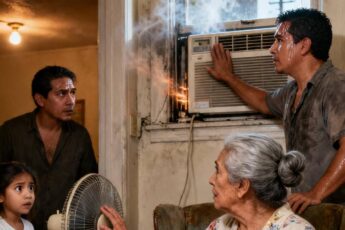
Dale Renner sat in his recliner with the blinds drawn, AC unit screaming at full blast, watching the local news drone on about another week of triple digits. The anchor, a blonde woman with a frozen smile, said the words “excessive heat warning” with the same tone she used for charity car washes.
He was sixty-four. Retired. Widowed. Living in a stucco box in a subdivision called Desert Mirage, which was neither a mirage nor a desert in the romantic sense. Just two thousand identical homes baking under a sun that didn’t care.
His phone buzzed. A text from his daughter Beth.
*Dad come to the town hall tonight. Marta’s presenting the green corridor thing. Packed house. Bring ice.*
Dale stared at the message. Marta. His daughter-in-law. He hadn’t spoken to her in eleven months.
Not since the funeral.
Not since she’d showed up at the reading of Carol’s will with that smirking lawyer from Scottsdale and walked away with the cabin in Pine. *His* cabin. The one he and Carol had built together in ’92, log by log, summer after summer. The one Dale had assumed would pass to him, because why wouldn’t it? They’d been married thirty-eight years.
But Carol, in that quiet, meticulous way of hers, had signed it over to Marta six weeks before she died. Signed it over and told no one.
“She asked me to,” Marta had said, standing in the parking lot outside the lawyer’s office, keys already in her hand. “She said you’d understand.”
He hadn’t understood. He’d said things he couldn’t take back. Called her a grifter. A manipulator. Said his son should’ve never married a woman from São Paulo who showed up with two suitcases and a smile full of promises. And then he’d driven home and thrown Carol’s garden gnomes into the trash, one by one, listening to them crack against the bottom of the bin.
Eleven months of silence.
Now she was presenting something to the city council. Something about trees. And Beth wanted him to go.
—
The town hall was packed, just like Beth said. Folding chairs with squeaky hinges. A portable AC unit rattling in the corner. Dale found a spot near the back, next to a guy fanning himself with a real estate flyer.
Marta walked to the podium at 7:42. She looked different. Thinner. Dark circles under her eyes that makeup couldn’t quite hide. But her voice was steady. Steadier than he remembered.
“Phoenix has a problem we all know about,” she began. “Heat. It’s killing people. Last year, 425 heat-related deaths in Maricopa County. The average daytime temperature in some neighborhoods hits 130 degrees on the asphalt. We’ve built a city that cooks us alive.”
She clicked a remote. Behind her, a slide appeared: a map of the city, with hot spots glowing red like infected wounds.
“But there’s a neighborhood in South Phoenix where the street-level temperature is nine degrees lower than the city average. Willow Creek. You know what’s different about Willow Creek? Trees. Native mesquite. Palo verde. Ironwood. Shade. The way the city used to be before we paved over everything.”
Dale shifted in his chair. She wasn’t wrong. He remembered driving through Willow Creek years ago and noticing how the temperature dropped the second the trees closed over the road. Like stepping into a different climate.
Marta clicked again. “I’m proposing something called the River Revival Corridor. We plant eight hundred thousand native trees along the canal system. We hire from the neighborhoods that need work the most. We do it in three years. And we save lives.”
The room erupted. Applause from half the crowd. Angry murmurs from the other half. Someone near the front stood up and shouted something about tax increases. A woman in a business suit started arguing about maintenance costs. The council members exchanged glances like poker players holding bad hands.
Dale kept his eyes on Marta.
She didn’t flinch.
—
Five years earlier, Marta had been a landscape architect in São Paulo. She’d worked on a project that turned a flood-prone slum into a park with retention ponds and native vegetation. The project won awards. Got her a visa sponsorship. Brought her to Phoenix, where she met Dale’s son, Jason, at a sustainability conference.
Jason was a civil engineer. Quiet, like his mother. They got married in the backyard of the Pine cabin, under a string of lights and a canopy of ponderosa pines. Carol had cried. Dale had made a toast with cheap champagne and called Marta “the best thing that ever happened to this family.”
That was then.
—
Now the city council meeting stretched past ten o’clock. They tabled the vote. Tabled it. Eight weeks of work, of knocking on doors and gathering signatures and building a coalition of community organizations, and five people behind a curved desk pushed it to next month.
Dale walked out into the parking lot. The heat hadn’t broken. It never did. The asphalt radiated warmth through the soles of his shoes.
He saw Marta sitting alone on a concrete planter near the edge of the lot. Her head was in her hands.
He almost kept walking. Almost got in his truck and went home to his recliner and his melted mailbox. But something stopped him. Something about the way her shoulders were shaking.
“Hey,” he said.
She looked up. Her eyes were red.
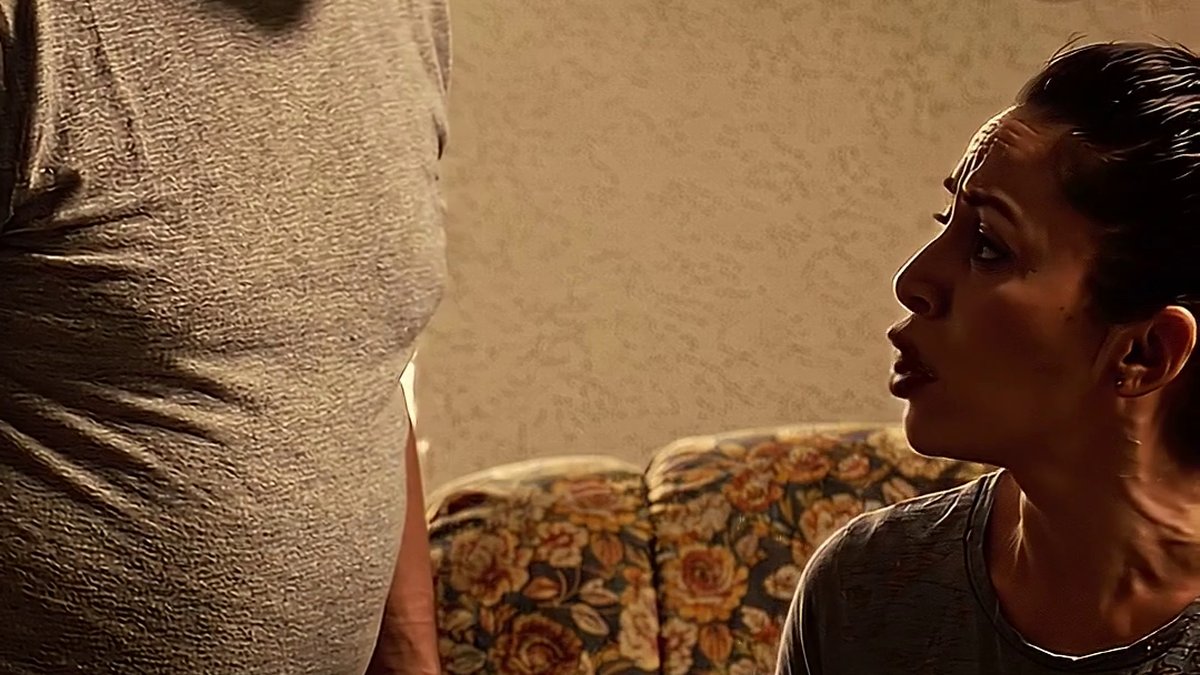
“They’re going to kill it,” she said. “The developers are already lobbying. They want that canal land for condos.”
Dale didn’t know what to say. The anger was still there, coiled in his stomach like a snake. But it was tired anger. Old anger. The kind that had been burning so long it had started to eat itself.
“Carol knew,” Marta said suddenly. “About the project. About what I wanted to do here. She said Phoenix was going to become unlivable in our lifetime if no one did anything radical. She said you’d understand why she gave me the cabin.”
Dale’s throat tightened. “What are you talking about?”
“The cabin wasn’t for me,” Marta said. “It was collateral. I took out a loan against it. A private one, from a green infrastructure fund in Portland. Two hundred forty thousand dollars. That’s the seed funding for the corridor project. The trees, the soil, the first round of community hires. It’s already spent.”
The parking lot tilted.
“Carol knew the city wouldn’t fund this,” Marta said. “She knew I needed cash in hand to even get them to listen. She gave me the cabin so I could borrow against it. She made me promise not to tell you until it was done, because she knew you’d try to stop it. She said you loved that cabin more than you loved the idea of a future.”
Dale’s hands were numb.
Carol. His Carol. The woman who’d spent their last summer together sitting on the porch of that cabin, watching the sunset, telling him stories about a city full of trees. Stories he’d only half-listened to, because he’d been too busy refinishing the deck.
She’d been telling him. The whole time. And he’d missed it.
—
He didn’t sleep that night. He sat in his recliner with the AC off, sweating in the dark, thinking.
At 3:15 in the morning, he pulled out his phone.
*Marta. I know the developers. The ones who want the canal land. I used to work with their VP of acquisitions. Let me make some calls.*
He stared at the message for a long time before he hit send. Then he set the phone down and waited.
The reply came at 3:47.
*I’m at the office. 14th Street and Van Buren. If you mean it, come now.*
—
The office was a converted warehouse with no AC and a wall covered in maps. Marta stood over a drafting table with three other people, all of them young, all of them looking like they hadn’t slept in days. Ceiling fans pushed hot air around the room. Empty coffee cups lined the windowsills.
“His name is Glenn Packer,” Dale said, spreading a business card on the table. “We dug ditches together in ’83. He owes me five solid favors. One of them’s about to come due.”
Marta looked at the card. Then at Dale. “Why are you doing this?”
“Because I’ve been an idiot for eleven months,” he said. “And because Carol would’ve wanted me to be here. And because if this city doesn’t get some goddamn trees, I’m going to melt before I see my grandkids.”
Marta didn’t smile. But something in her face shifted. Something that looked almost like hope.
—
The next month was a blur of conference calls and community meetings and strategic leaks to the press. Glenn Packer, true to his word, delivered a two-week delay on the developer bid. Just enough time for Marta’s team to mobilize three neighborhood associations, two nonprofits, and a very loud coalition of public health researchers from ASU.
When the council reconvened, the room was standing-room only. Dale sat in the front row, next to Beth. Jason was there, too, back from a job site in Tucson, holding his wife’s hand.
The vote passed. Six to one. The River Revival Corridor had a green light.
—
Two years later, Dale walked down Central Avenue at noon and felt something he hadn’t felt in decades: a breeze. Actual wind, moving through the branches of young mesquite trees that lined the median. Shade dappled the sidewalk. The temperature gauge on the bank building read 98 degrees, but it felt like 85.
The canal corridor was only half-planted, but the difference was already measurable. Hospital admissions for heat stroke had dropped fourteen percent in the surrounding zip codes. A bike path ran alongside the water, and people actually used it. Families. Kids walking dogs. Old men with fishing poles.
Dale drove up to Pine on a Tuesday in late September. The cabin was still there, still his in some way that mattered more than paperwork. He parked in the gravel drive and sat on the porch, watching the light filter through the trees.
In his pocket was a photograph. Carol, on this same porch. Smiling. A glass of lemonade in her hand. Behind her, the pines stretched tall and cool and endless.
He hadn’t understood. Not then.
But he did now. The trees were never about shade. They were about time. About planting something that would outlast you. About believing there would be a future, even when the heat said otherwise.
The photograph was tucked into his wallet next to a new one: Marta, in a hard hat, holding a mesquite sapling. Jason beside her. Beth grinning. Dale in the middle, squinting at the camera, looking like a man who’d finally come home.
He stayed on the porch until the sun dipped below the ridgeline and the first cool air rolled down from the mountains. Then he went inside, poured himself a glass of lemonade, and started sketching out plans for a greenhouse. Something small.
Something that would grow.