The casting call in ’98 was for a new medical drama set in Boston, something called *Mercy General*. Daniel was thirty-one, had a couple of indie films under his belt that nobody saw, and a recurring gig as a quirky lab tech on a cop show that was about to get canceled. The role of Dr. Marcus Webb, the brooding but brilliant forensic pathologist, was supposed to be a one-season arc. A handsome face to stand over a body and deliver exposition about lacerations.
He took the job because his agent said the money was steady and the show had a creator with a track record. That was it. A paycheck. A step up from guest spots and waiting tables.
The show didn’t get canceled. It exploded.
Within three years, *Mercy General* was pulling in eighteen million viewers a week. Daniel’s character, Dr. Webb, was the moral center of the show—a guy who spoke for the dead when nobody else would. The network slapped his face on billboards across the country.
Then the letters started coming.
At first, they were forwarded through the studio mailroom in manila envelopes. Fan stuff. A lot of “you’re my favorite character” and “my daughter wants to be a doctor because of you.” His assistant sorted them, he signed a few headshots, end of story.
One Tuesday in February, she handed him a stack with a specific note on top. *You need to read this one yourself.*
The handwriting was tight, cramped, like every word cost something.
*Dr. Webb, I know you're not real, but I don't know who else to tell. My son died on an operating table three years ago. They said it was a complication. I found out later the surgeon was drinking during the procedure. Nobody would listen. The hospital settled and made me sign a paper. I haven't said his name out loud in two years. Watching you on Thursday nights is the only time I feel like someone is actually fighting for the people who can't fight anymore. Thank you for being the one person who still cares about my boy.*
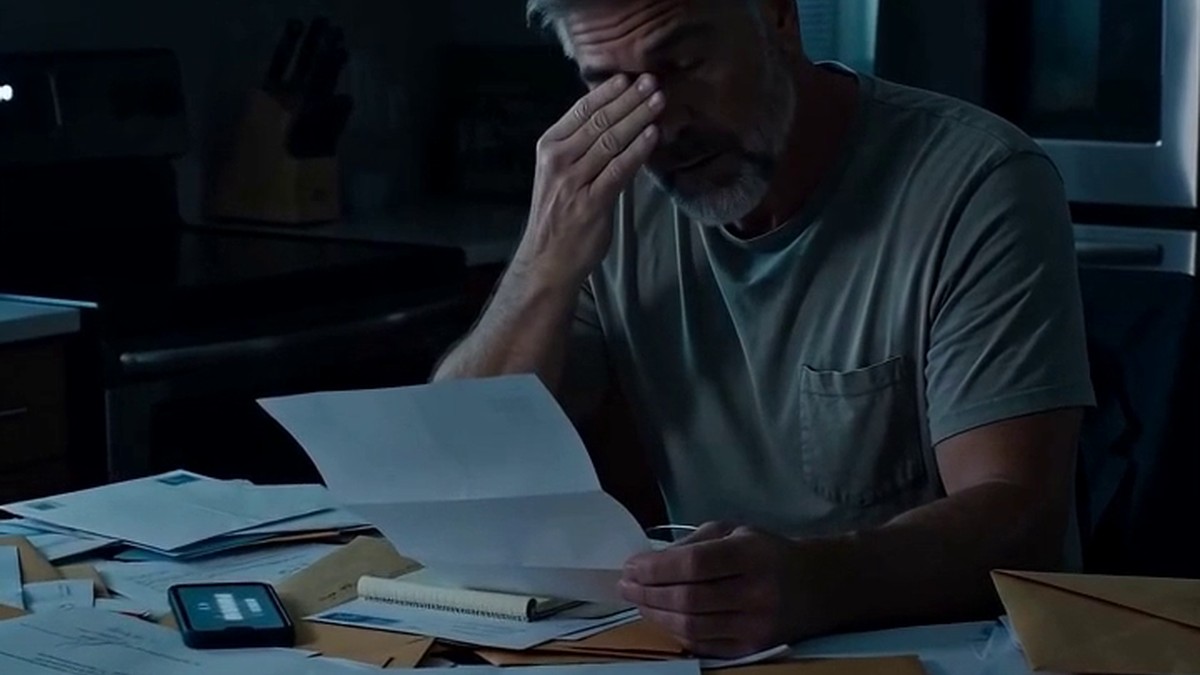
Daniel sat in his kitchen and read it four times. He wasn’t a real doctor. He couldn’t do a damn thing. He had a degree in theater arts and a Golden Globe nomination. That letter should have gone to a lawyer, an investigator, a journalist. Not to a guy who memorized fake medical jargon for a living.
It was the first of thousands.
They didn’t write to Daniel Whittaker. They wrote to Marcus Webb. A fictional coroner with fictional courage. Survivors of domestic violence. Parents whose children died in custody. Women who had been assaulted by their own husbands and told by their own mothers to be quiet about it. Decades of silence poured onto paper and addressed to a character on a Wednesday night drama.
A lot of actors would have let it harden them. Built a wall, hired a service to send back printed autographs with a form letter. Most of his co-stars did exactly that.
Daniel couldn’t stop reading.
He started showing up at actual medical board hearings. Just sitting in the back, anonymous in a ball cap, watching families beg panels of indifferent bureaucrats for accountability. He met a mother who had traveled eight hours by Greyhound to testify about her daughter’s death, and he listened to her for three hours in a diner near the statehouse.
His publicist lost her mind. *You’re an actor, Daniel. You’re not a crusader. Do a charity golf tournament and move on.*
He got certified as a patient advocate instead. Spent eighteen months training with a non-profit that worked on medical transparency legislation. Learned the language of hospital administration and state regulatory codes.
In 2005, he launched the Clear Horizon Project.
The mission was simple on paper: connect families who lost loved ones to medical negligence with pro bono legal teams and independent review boards. Push for mandatory reporting and public disclosure of disciplinary actions against physicians. Shine a light into the place where hospitals kept their darkest secrets.
What he didn’t know yet was how deep the rot went.
Two years in, his team uncovered a federal database backlog that made his stomach turn. Across all fifty states, nearly four thousand formal complaints against surgeons and physicians sat in administrative purgatory, uninvestigated. Some had been sitting there since the late 1980s. Doctors with multiple malpractice judgments were still practicing. Still operating. Still killing people.
Daniel didn’t just make phone calls. He flew to D.C. and camped out in Congressional waiting rooms. He sat across from stone-faced lawmakers and laid out case files on their desks. One of them, a senator from Illinois, told him to his face, *“Son, you play a doctor on television. This is real life.”*
He didn’t blink. *“Senator, every letter in my office was written by someone who’s living real life. You just haven’t been reading their mail.”*
In 2014, he executive-produced a documentary called *The Quiet Ward*. It followed three families through their fight for medical records, through hallway confrontations with hospital attorneys, through the small, brutal moments that never make the news. The film stopped a premiere at Tribeca. Then it aired on a major cable network.
The documentary didn’t just win awards. It opened an investigation at the Department of Health and Human Services.
Clear Horizon’s legislative team started working state by state. They drafted model bills. Testified in hearings. Trained families to tell their stories in three minutes or less because that was all the time a committee chair would give them. Daniel learned to sit still and quiet while a grieving father stumbled through a testimony, and then stand up and deliver a five-minute rebuttal to a hospital lobbyist’s arguments with the same clipped, unflinching delivery he’d perfected on a soundstage.
One by one, states moved.
California passed a mandatory reporting law in 2016. Texas followed with a reform package on surgical oversight in 2018. New York, Pennsylvania, Ohio. The map began to shift. By 2022, Clear Horizon had contributed to the passage of more than ninety pieces of legislation across forty-one states. The backlog of uninvestigated complaints was cut by more than half. Ten thousand families had been connected with legal counsel through the organization’s networks.
But there was one holdout that drove him crazy. One state where the hospital lobby had killed every reform attempt for a decade straight. Where a particular senator—a former surgeon himself—had personally blocked the bill in committee three years running.
His name was Paul Cormier. And he represented the district where Daniel was born.
In the spring of 2025, Daniel flew into Manchester, New Hampshire, on a cold, gray Tuesday. He didn’t have a crew with him. No cameras. Just a lawyer, a folder full of case summaries, and the names of seventeen families from the senator’s own district who had lost someone to preventable medical error.
He didn’t go to the statehouse. He went to a town hall at a VFW hall in Concord.
Senator Cormier was wrapping up a canned answer about healthcare costs when Daniel stood up from a folding chair in the fifth row. The room got very quiet.
*“Senator, my name is Daniel Whittaker,”* he said. *“I grew up about forty minutes from here. And I have seventeen letters in my hand from families in this room who say you’ve refused to meet with them for four years. I’m asking you, right now in front of your constituents, to explain why you’ve buried the Patient Shield Act in committee for the third time.”*
Cormier’s face went stony. He leaned into the microphone.
*“I don’t take orders from Hollywood actors.”*
Daniel held up the letters.
*“These folks aren’t Hollywood, Senator. They’re your neighbors. And they’d like an answer.”*
A woman in the front row stood up. She was in her sixties, thin, wearing a department store coat that was probably the nicest thing she owned. She didn’t shout. Her voice was so soft the microphone barely caught it.
*“My husband died on your operating table, Doctor Cormier. In 1998. I’ve been waiting twenty-seven years for someone to say they’re sorry.”*
The senator didn’t answer. He just gathered his notes and walked out the side door, two aides scrambling behind him.
The clip went viral.
Within forty-eight hours, the Patient Shield Act had three new co-sponsors in the state senate. Two weeks later, the committee chair who had been sitting on the bill suddenly scheduled it for a hearing.
Daniel testified in Concord on a Wednesday morning in May. He didn’t talk about his TV show. He didn’t talk about his awards. He talked about a woman named Margaret who had emailed him in 2008, whose son Charlie died of a medication error because a doctor with twelve prior complaints was still practicing. Margaret had been in the audience at the VFW hall. She sat in the hearing room and cried without making a sound.
On May 16th, 2026, the Patient Shield Act passed the New Hampshire state senate by a vote of eighteen to six. The governor signed it a week later.
That made it fifty states. Every single jurisdiction in the country had now adopted at least one major plank of the transparency reforms Clear Horizon had been pushing for over two decades.
Daniel got the call in his trailer on the set of *Mercy General*. He was in scrubs, waiting for the next setup. His assistant knocked and handed him her phone with the news.
He sat down on a fake hospital bed surrounded by beeping props and medical monitors that weren’t connected to anything. He didn’t cry. Didn’t pump his fist. He just looked at the poster on the wall—the one the art department had put up years ago, a fake diploma for Dr. Marcus Webb, M.D.—and let out a breath he felt like he’d been holding since 2003.
Twenty minutes later, they called him to set. He walked onto a soundstage dressed up like a morgue and delivered a monologue about trace evidence on a fictional corpse, and forty crew members applauded when the director yelled cut, and absolutely none of them knew what had just happened.
He’s still playing Dr. Marcus Webb. The show is in its twenty-eighth season. The ratings are still good. He’s got a star on the Walk of Fame and a shelf full of the hardware.
But when people ask him what he does for a living, he doesn’t say *actor*. He says he runs a patient advocacy organization. And then, if they’re still listening, he tells them about Margaret and Charlie and a town hall in Concord where a woman in a department store coat finally got her answer.
A fictional doctor gave thousands of grieving families permission to speak.
A real man turned those voices into law.